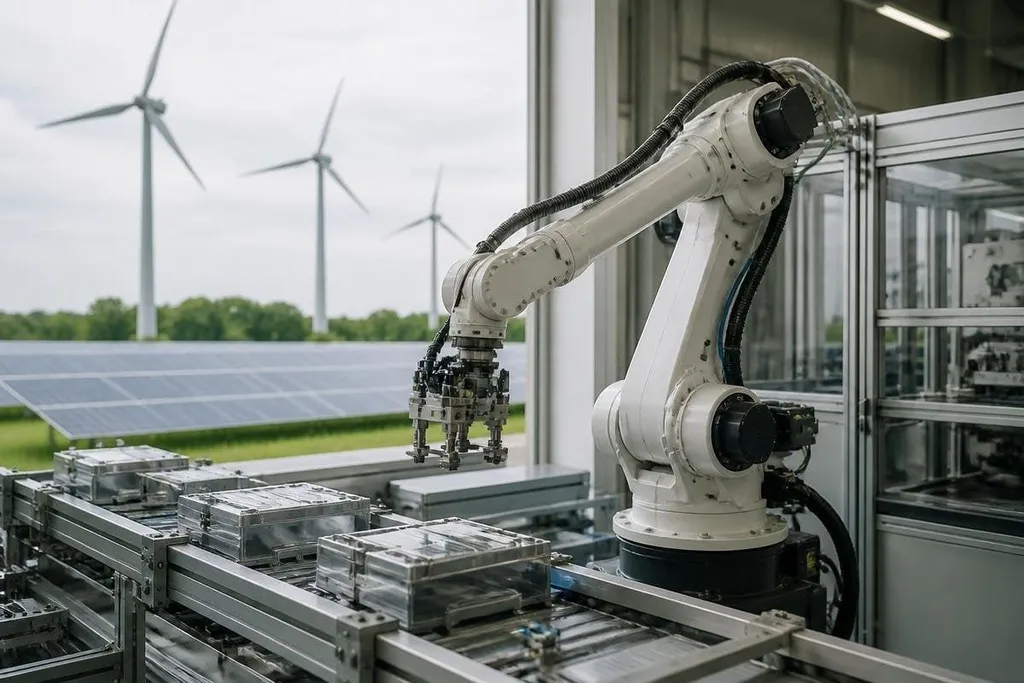
A robot can lower a company’s carbon emissions when it uses less energy and material than the process it replaces. Its emissions can rise when it runs on carbon-heavy electricity, sits idle, or adds work without removing the old process.
Quick read:
- Robots save emissions through lower waste, fewer trips, and steadier energy use.
- Electricity demand, maintenance, and equipment disposal count too.
- A carbon check should compare the full robot system with the current process.
Where robots can reduce emissions
The clearest gains come from repeated work that already uses fuel, electricity, or large amounts of material. An autonomous mobile robot can move goods through a facility without a forklift making the same trip. An inspection robot can check pipes, tanks, or solar panels without sending a person and a vehicle to each location.
The saving depends on what the robot replaces. If a robot removes diesel vehicle trips, its electricity use may be a small part of the old system’s emissions. If it replaces a hand task in a building that already runs on low-carbon electricity, the change may be smaller.
Manufacturing robots can also cut waste by repeating the same motion and applying a fixed amount of paint, adhesive, or sealant. Less scrap means fewer raw materials need to be processed and moved. That benefit only counts when the robot’s accuracy works under real production conditions, not only during a short demonstration.
Electricity changes the answer
Every robot has an energy cost. Motors move joints or wheels, sensors gather data, computers process instructions, and charging systems draw power while the robot waits between tasks. A company needs the full operating picture rather than the motor rating alone.
The electricity source matters too. A system powered by a cleaner grid will have a different carbon result from the same system powered by a fossil-heavy grid. Batteries add another part of the calculation because their production, replacement, and disposal sit outside the robot’s daily power use.
Utilization matters just as much. A robot that works through two shifts can spread its manufacturing and delivery emissions across more output than one that runs for a short period each day. Idle equipment still takes floor space, needs service, and has an environmental cost from the materials used to build it.
The old process does not disappear by itself
A company can install a robot and keep every part of the old workflow.
People may still move parts by hand, vehicles may still make the same trips, and extra inspection steps may remain in place. In that case, the robot adds electricity use without removing much carbon from the system.
This is why process design matters. The company needs to track the task before purchase, then check which vehicle trips, material losses, working hours, and energy loads actually changed after deployment.
Carbon savings show up in the work a robot does after installation. Robot24.com robotics coverage can point you to reports that name the robot, site, task, and measured change in energy or material use. That record gives you a better basis for judging the maintenance burden that follows.
Maintenance also affects the result. A worn wheel, poorly tuned arm, or damaged battery can raise energy use and shorten the machine’s working life. Spare parts and repair access matter because replacing a full robot for a small failed component creates more material demand.
What companies should measure
A useful comparison starts with the existing task. Record the fuel, electricity, travel, waste, and equipment already tied to that work. Then measure the same categories after the robot enters service.
The time period needs care. A robot may use more electricity during its first months while staff learn the system, adjust routes, or fix faults. The review should cover normal operation rather than a launch week or a single successful shift.
I’d approve a robot for carbon reduction only when the company can name the old energy use, the new energy use, and the work that disappeared between them.
A carbon check before purchase
Use this list during a robot project review:
- Map the old task. Record fuel, power, travel, waste, staff movement, and equipment use before installation.
- Count the full load. Include charging, computing, sensors, cooling, network equipment, and standby power.
- Check the electricity source. Use the power mix for the site where the robot will run.
- Set an operating target. Define the shifts, tasks, and output needed to justify the equipment.
- Track removed work. Confirm which vehicle trips, material losses, or manual steps have actually stopped.
- Plan the second life. Ask how batteries, motors, controllers, and the full robot will be repaired, reused, or recycled.
The useful question is not whether a robot is green by itself. It is whether the complete system uses fewer resources than the process it replaces, and whether the company will measure that difference after deployment. If those figures never appear, the carbon claim remains unproven.